
Dear Babcia, Poo Wee Neigh
Nina Dorabialski
Roomsheet
After seven years in Berlin, the artist returns to Sydney at thirty-one, suspended in a teenage time warp—caught between political awakening, immigrant dislocation, and the sacred and profane rituals of survival.
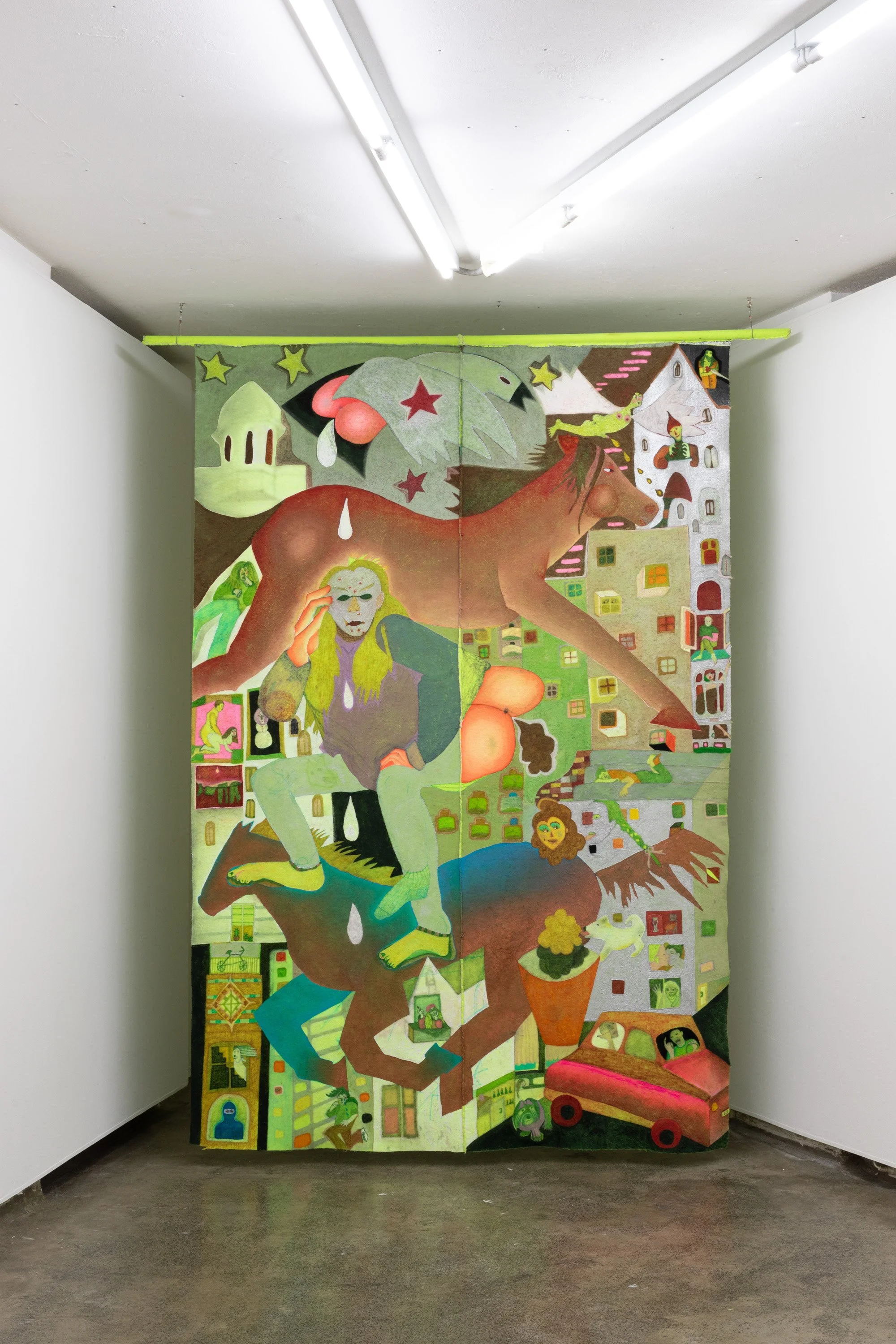
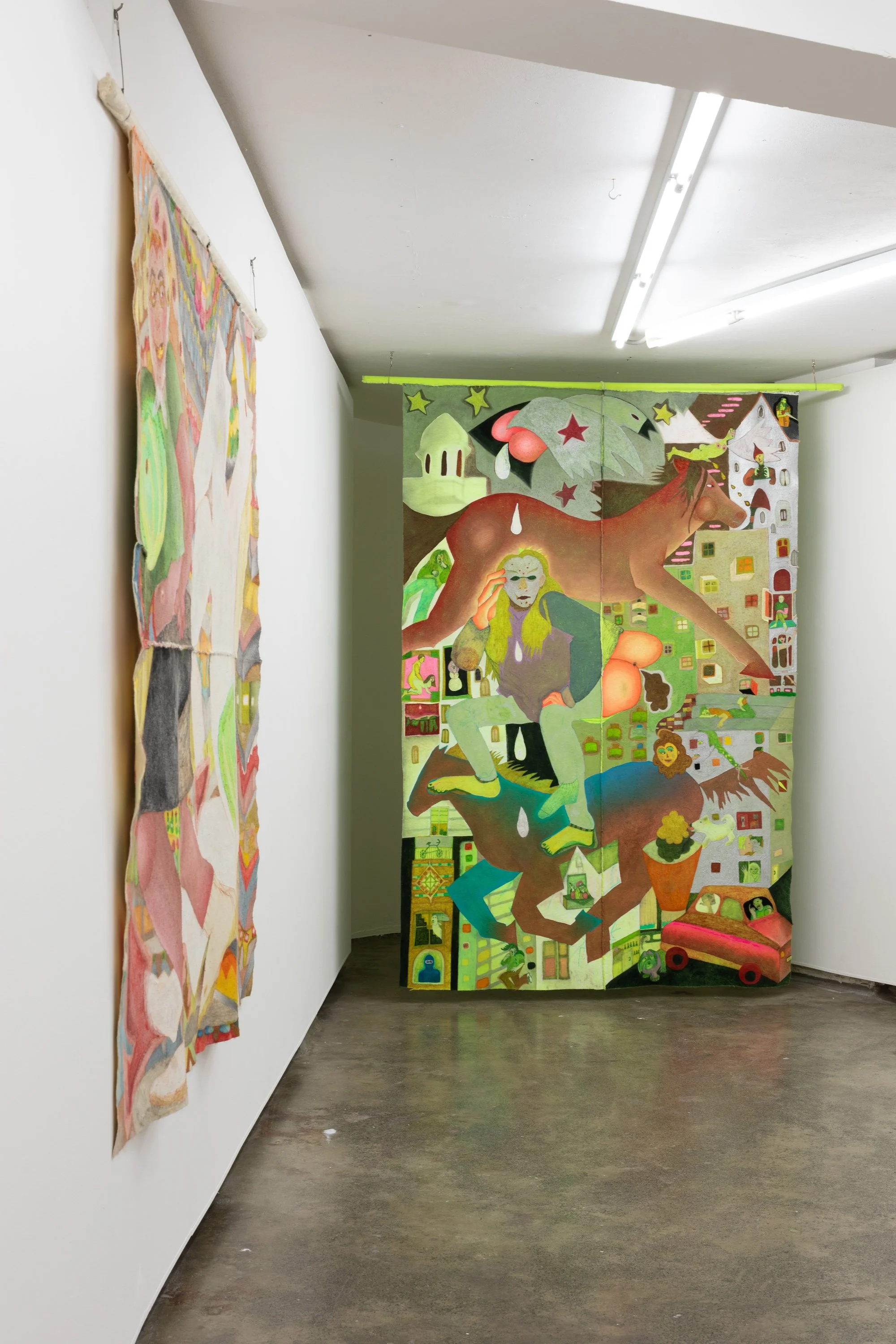
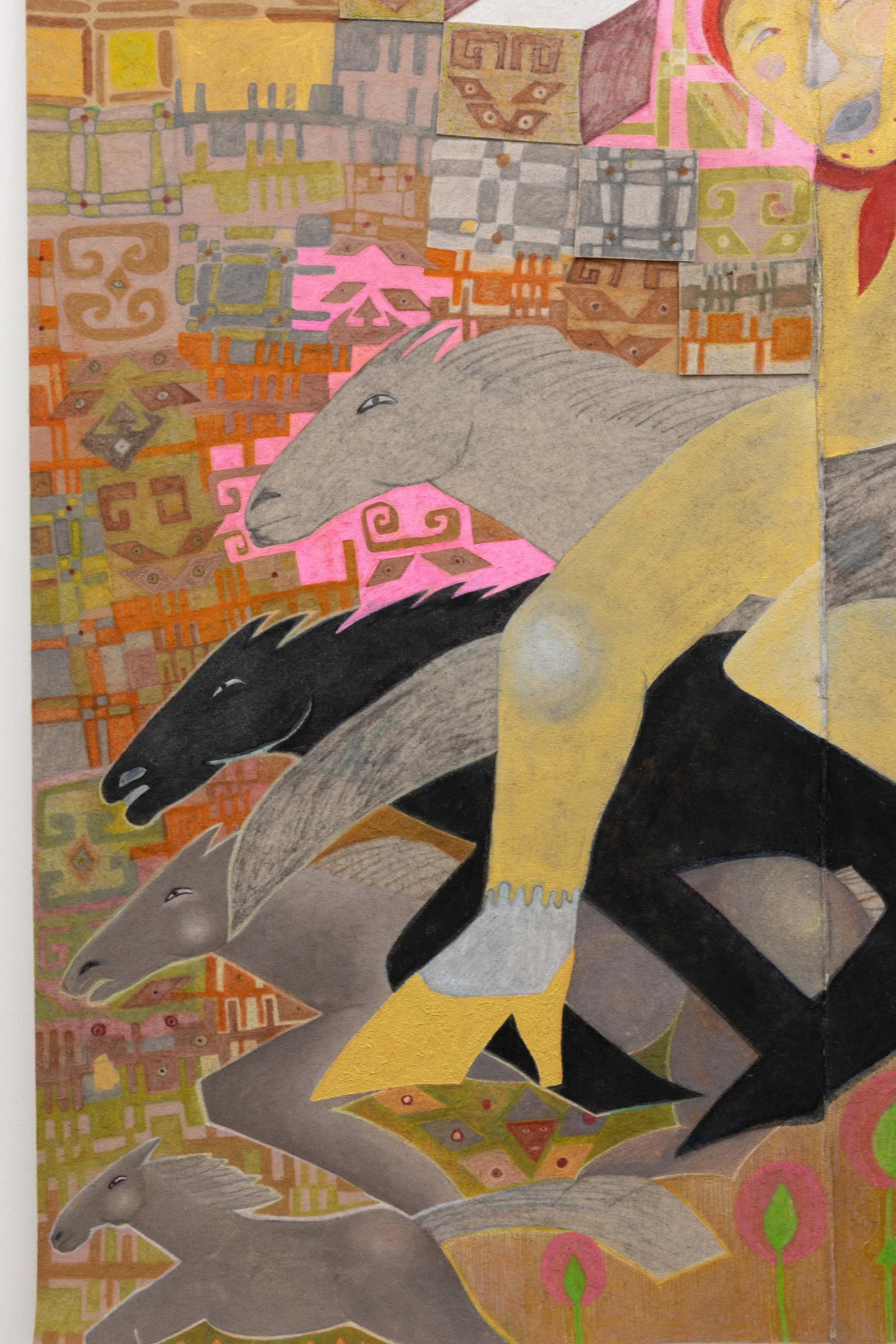
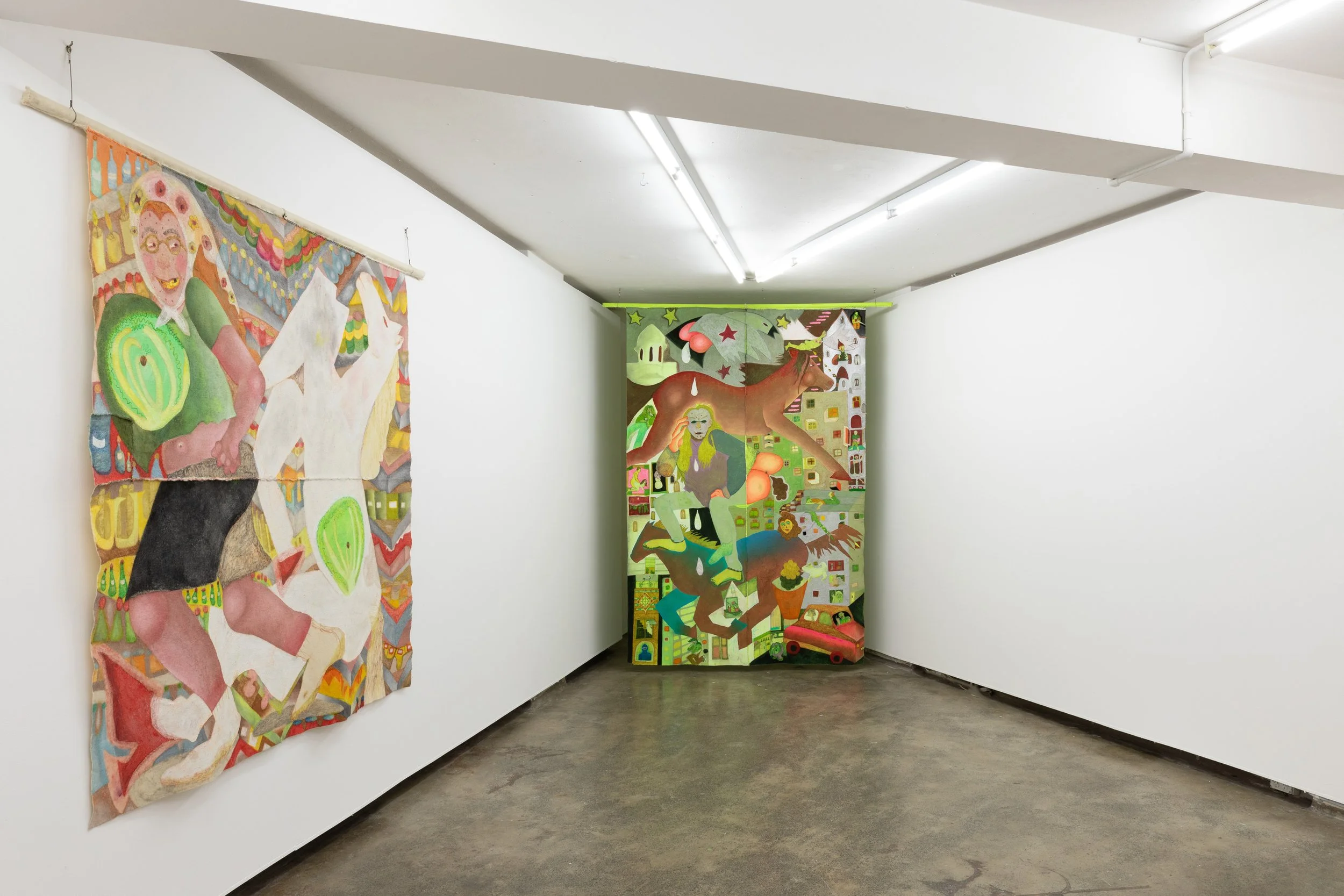
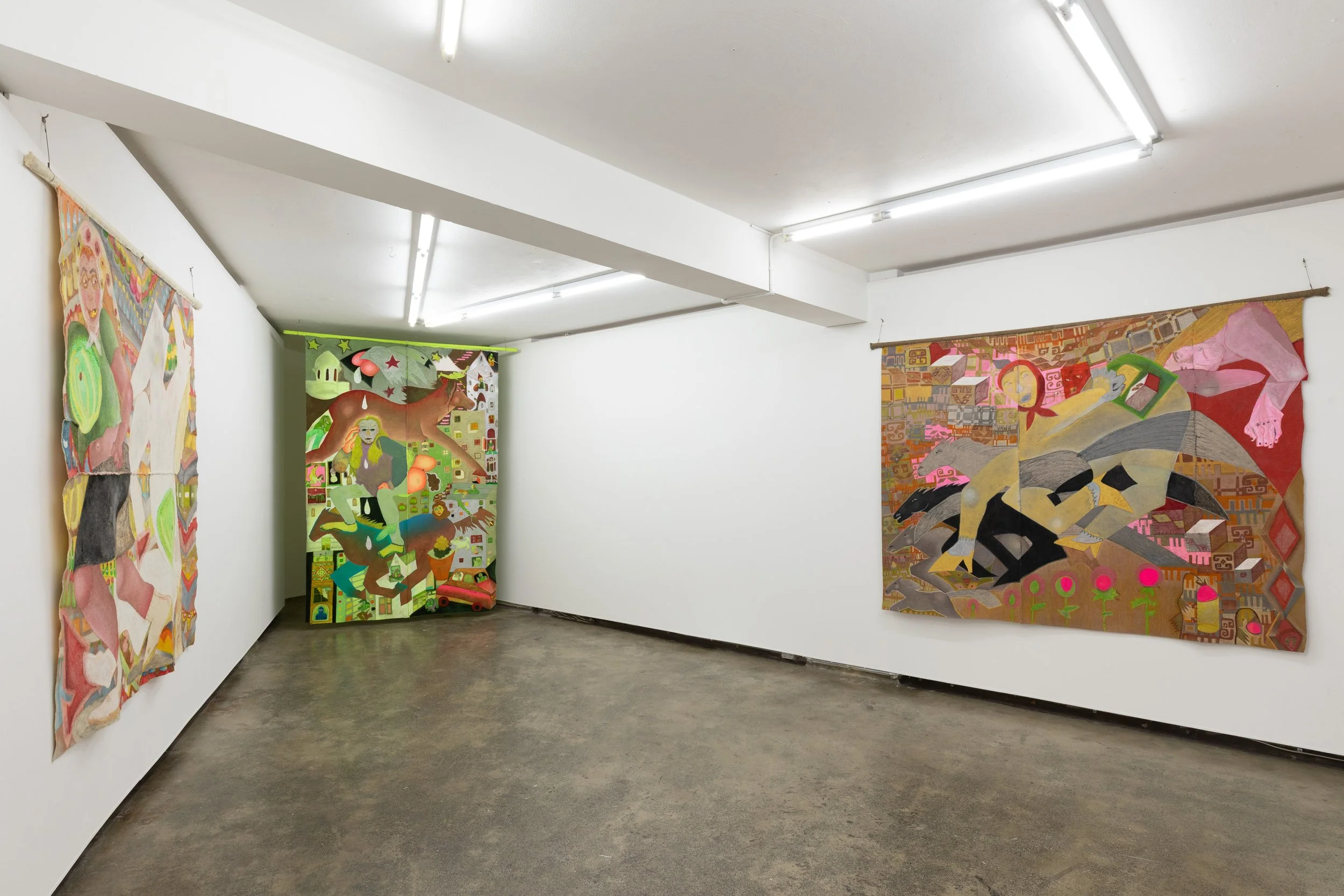
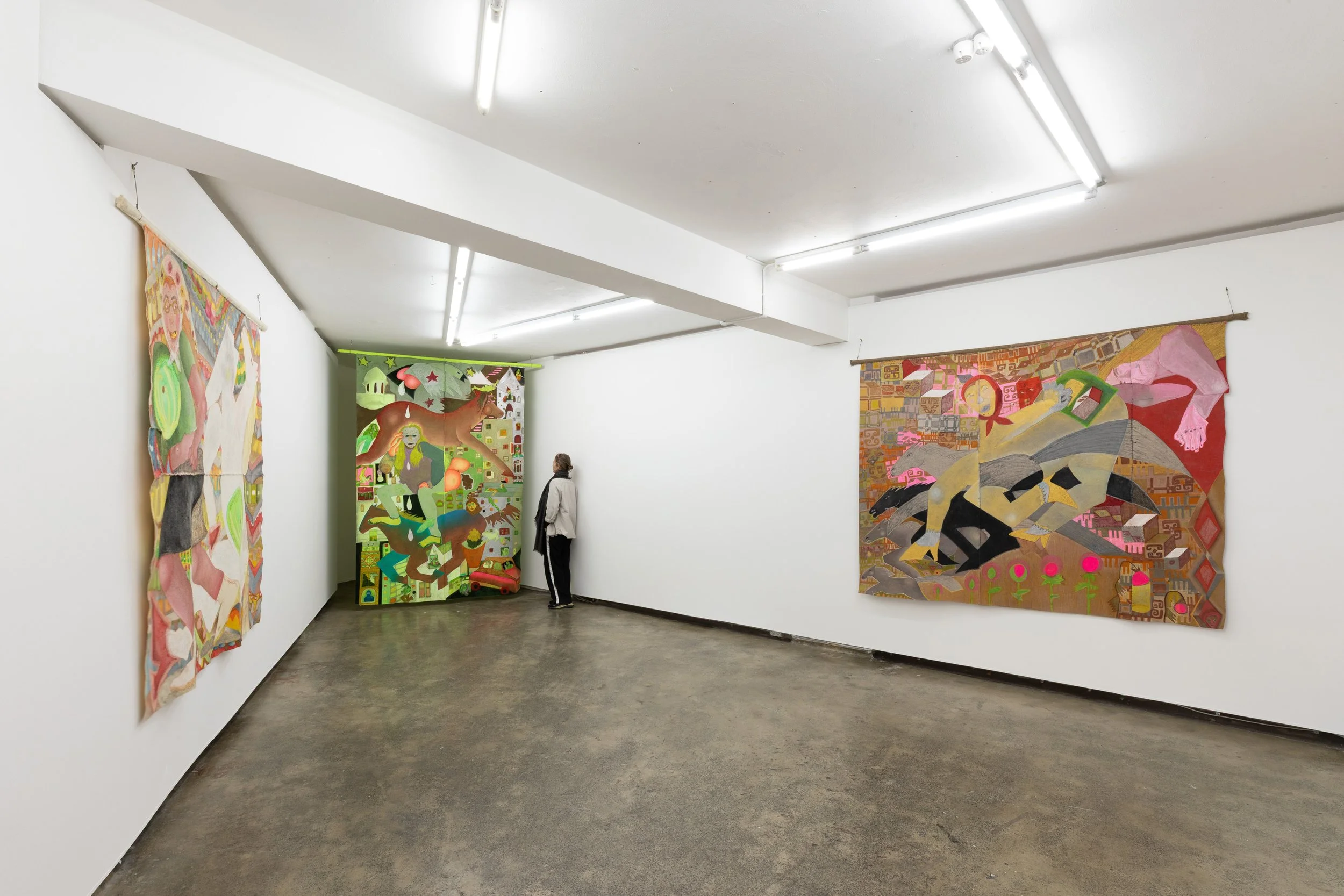
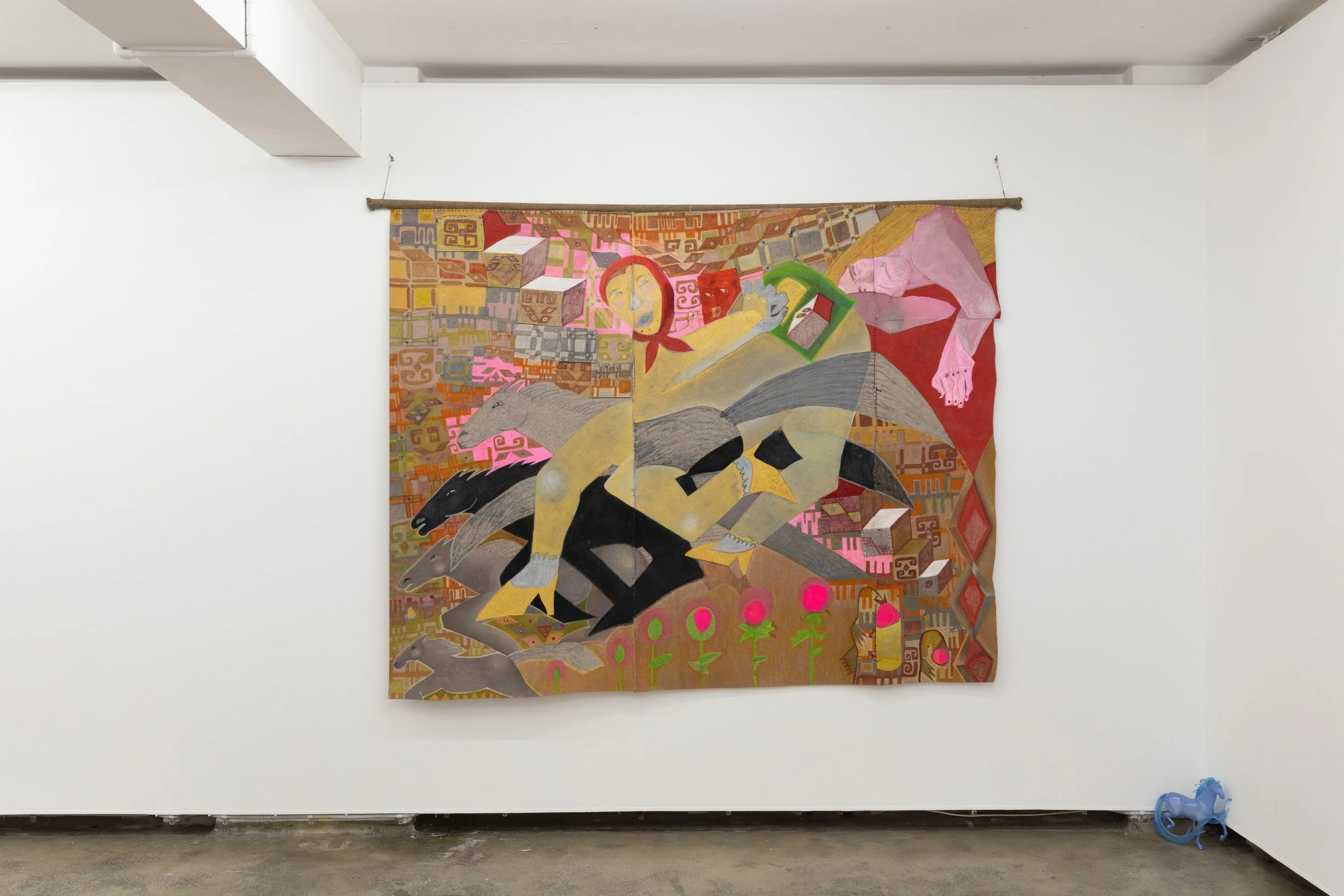
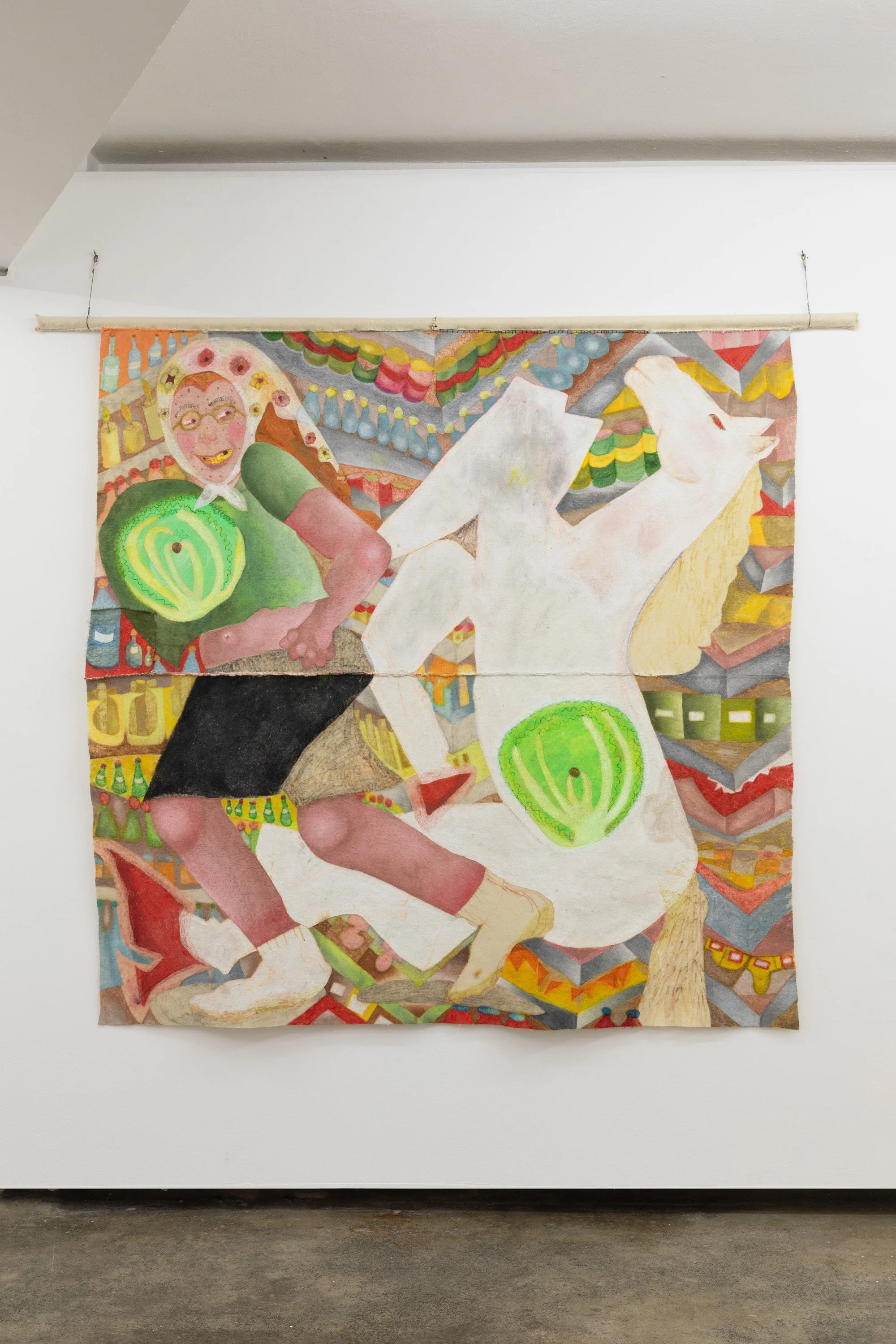
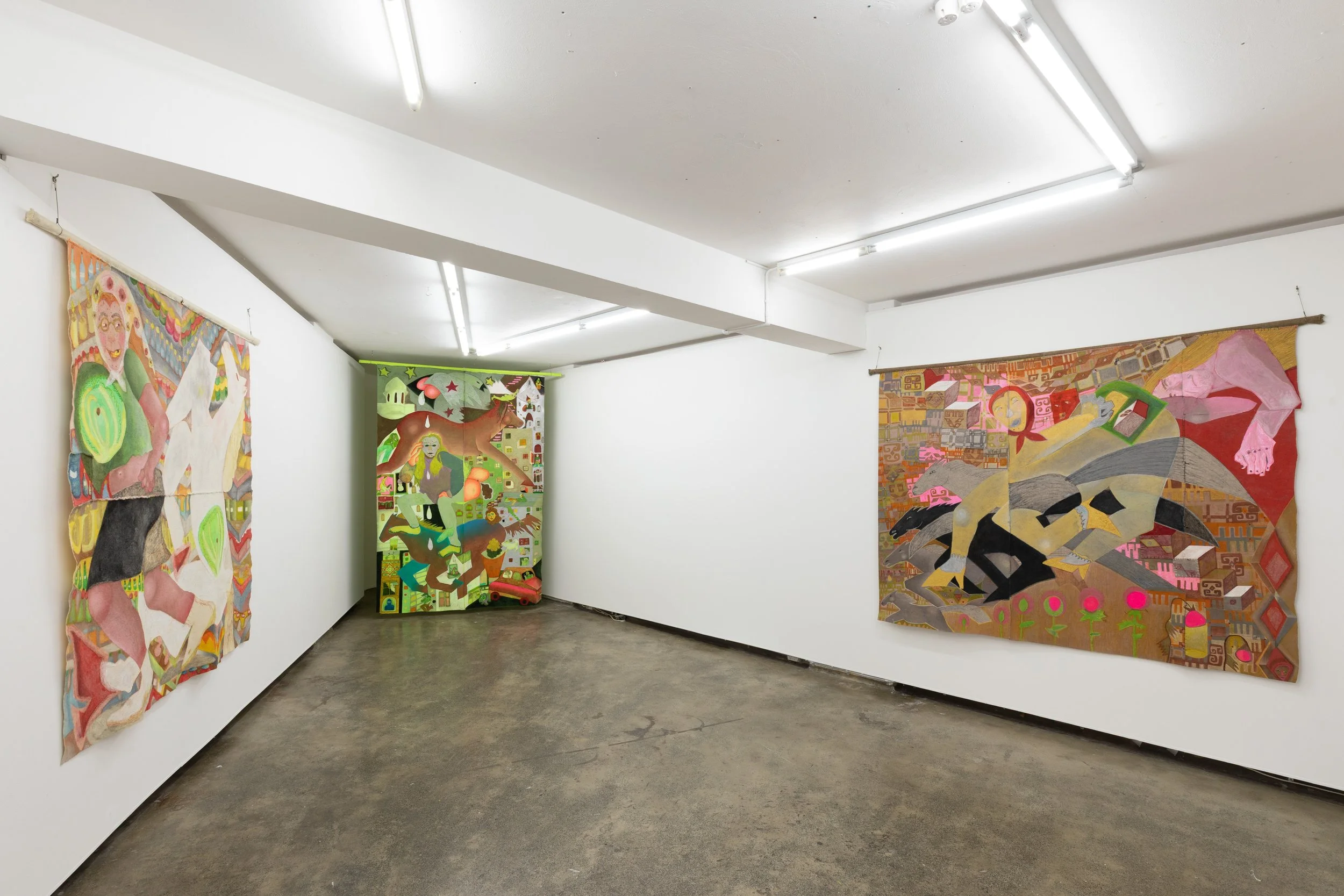
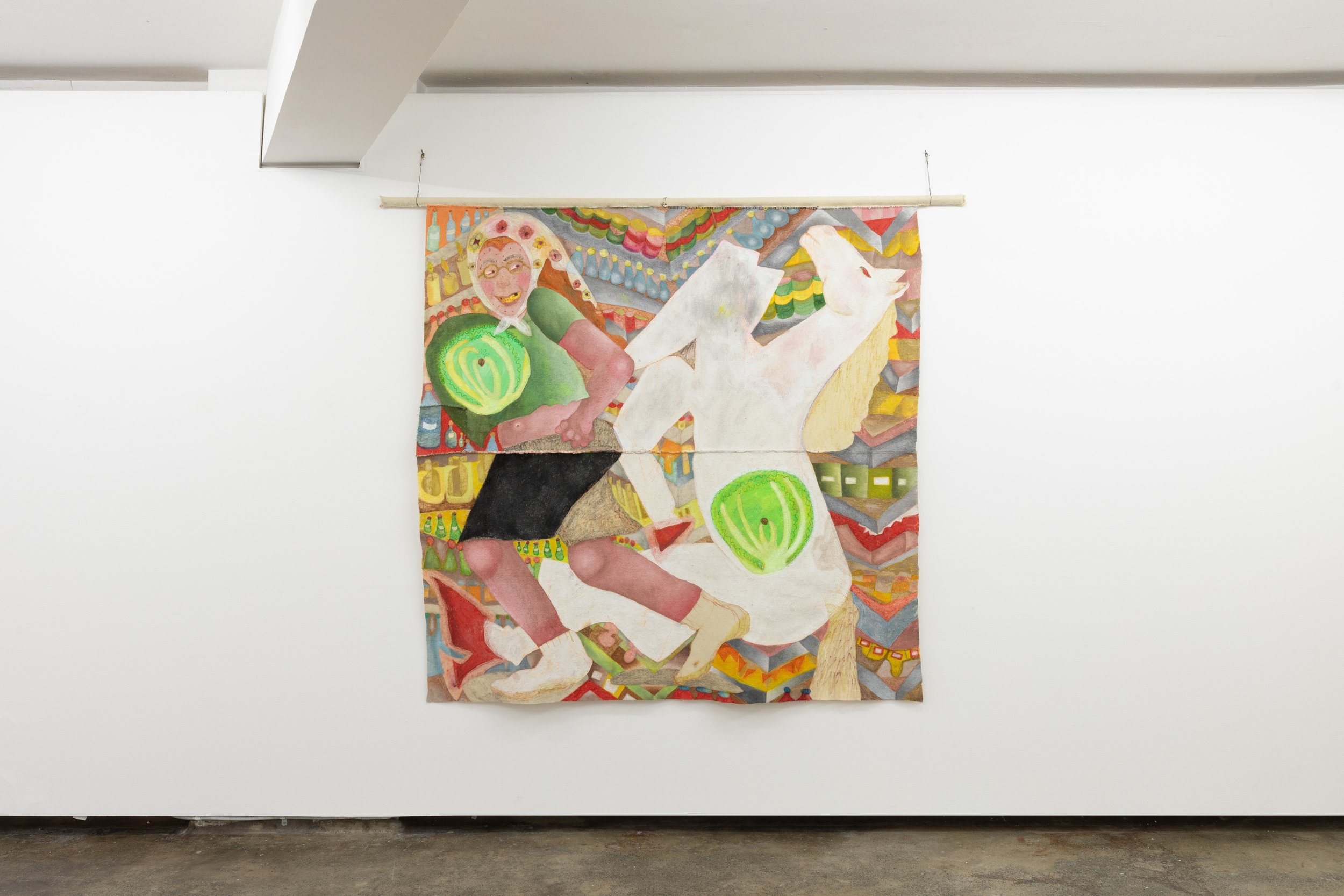
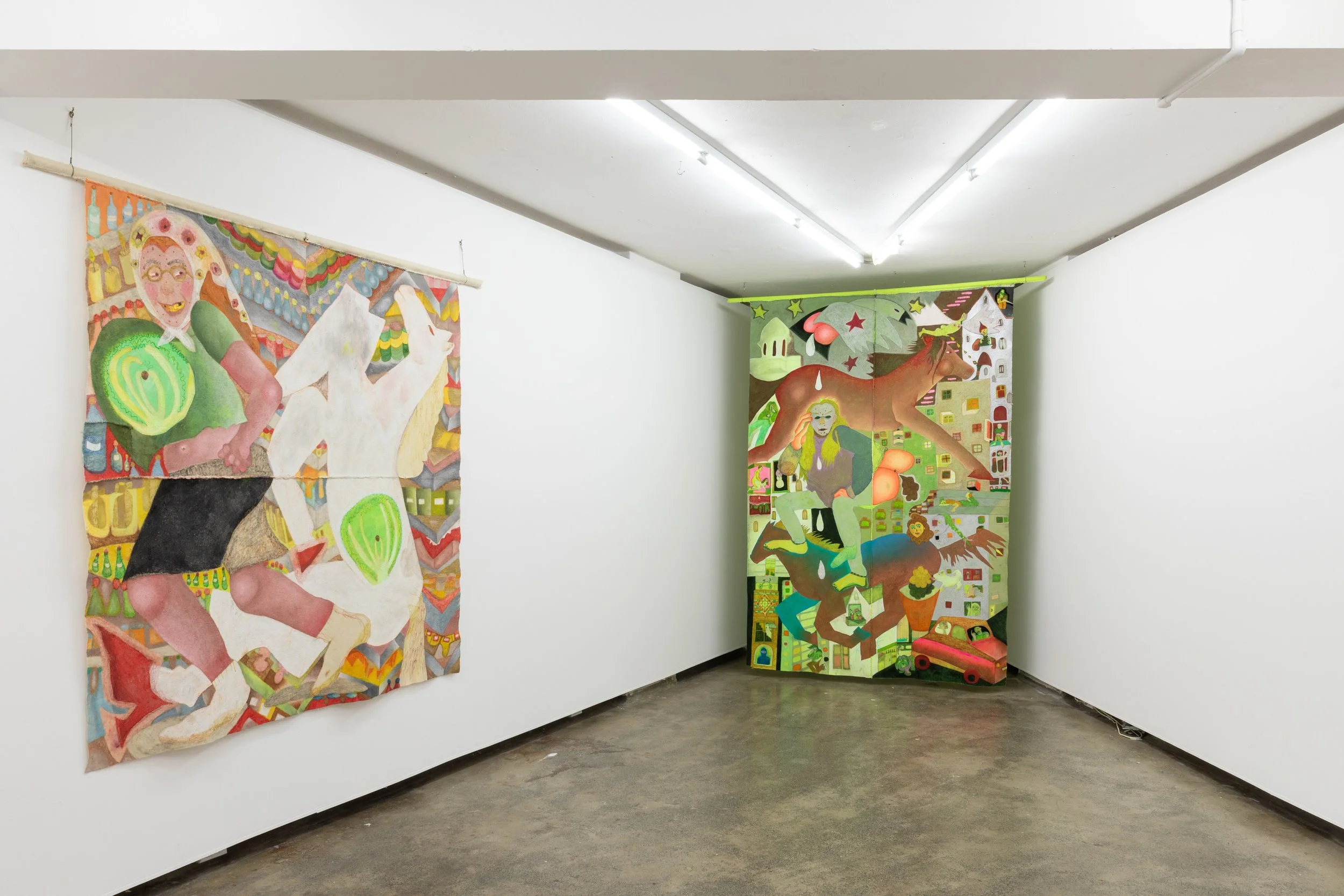
Through large-scale felt paintings and participatory ritual, she interrogates abjection, shame, and the alchemy of disgust. Horses, strippers, and dead grandmothers emerge as spiritual guides in a darkly humorous reckoning with identity, power, and the chaos of reinvention. Thick sections of felt, hand-stitched and matted with acrylic paint and pen, create texturally dense, visceral surfaces. The artist invites viewers to participate in a wax reading, an old Polish folk divination ritual. Participants share a question, their favourite animal, number, and colour, collaborating to interpret the wax's shapes. Remnants of this performance will sit in the space signalling the lost memory of a shared community. The act is intimate, chaotic, and laced with humour—a nod to ancestral guidance and the absurdity of seeking control.
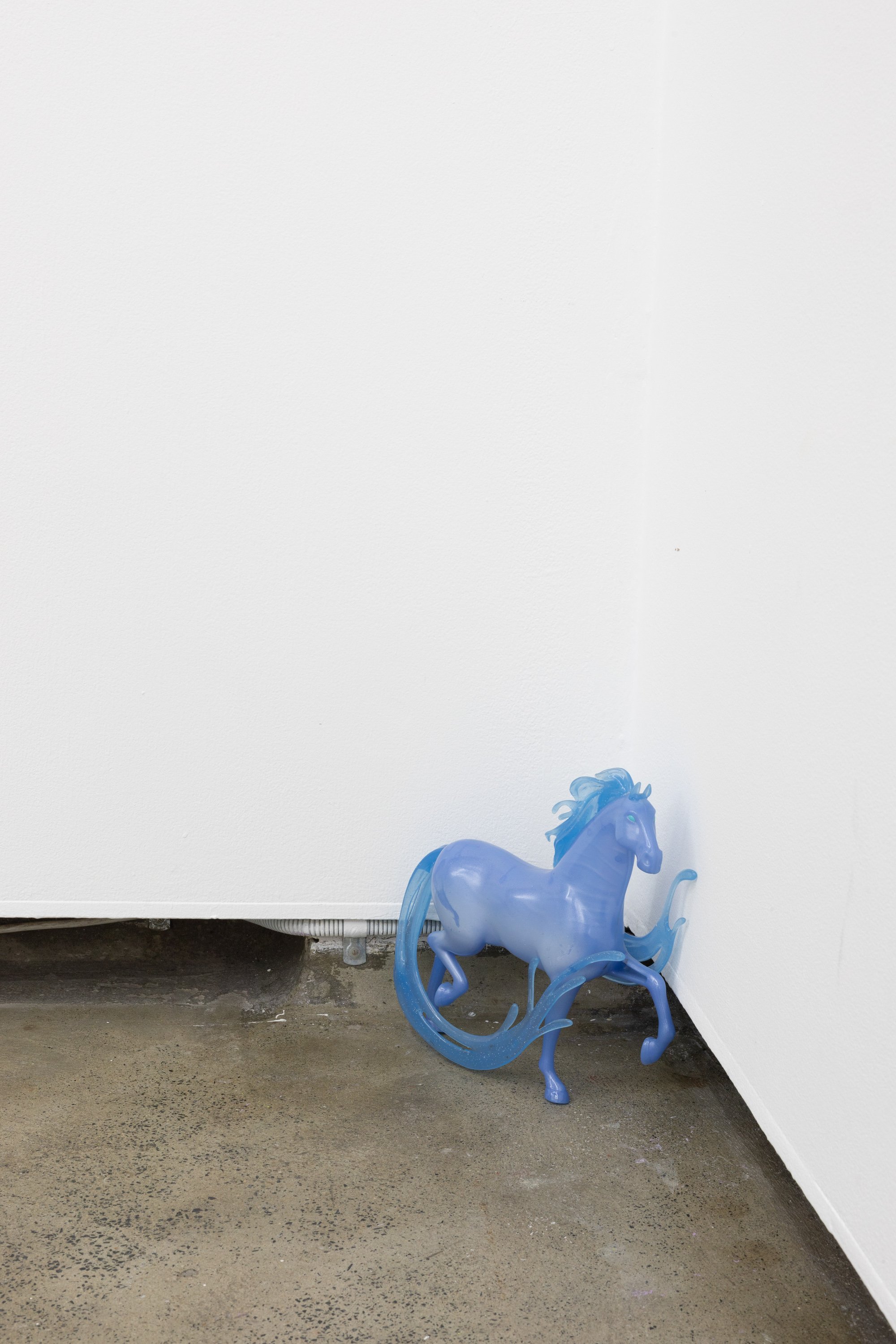
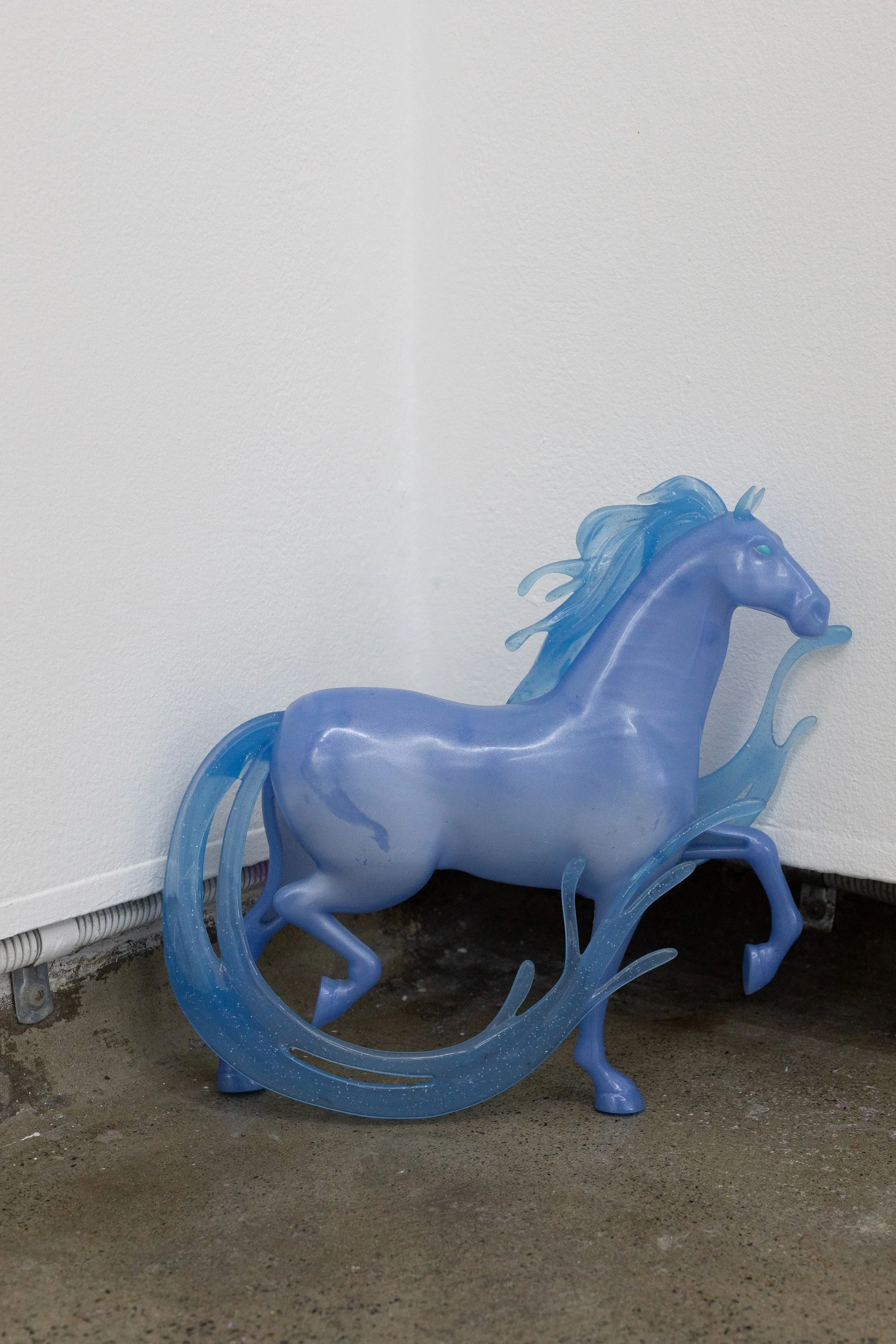
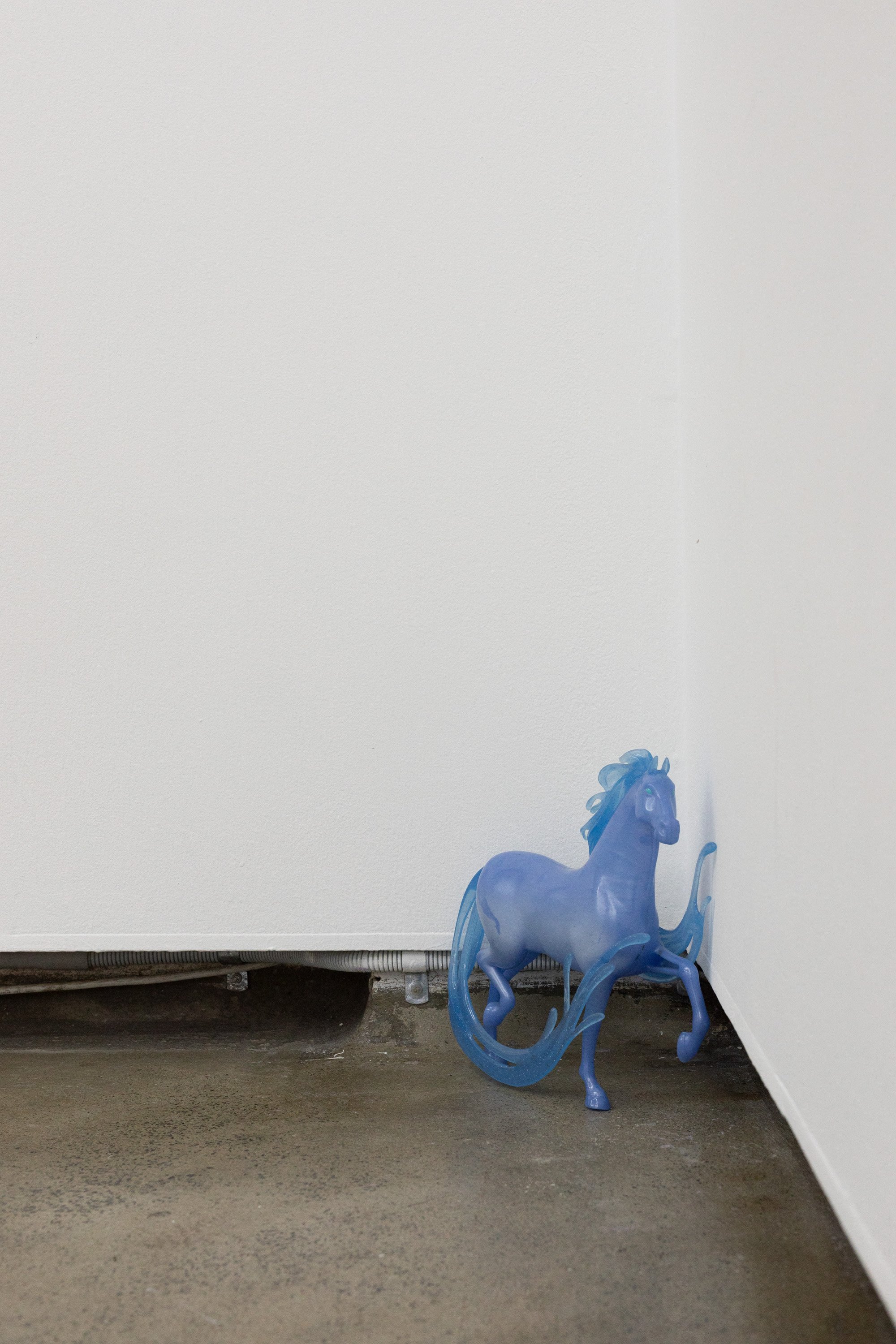
The "horse girl" archetype—often dismissed as a symbol of escapism—becomes a vessel for examining neurodivergence, arrested development, and the immigrant's fractured sense of home. For the artist, the horse is the only constant: not tied to nationhood, but to obsession. Polish folklore and Soviet aesthetics—known personally only to the artist's parents—weave through the work psychically, offering fractured narratives of survival and a longing for a home in a time and place the artist herself never knew. Her mother's stories interlace with her own experiences, the two merging into a singular personhood glued together through an ongoing conversation of romantic memories and notions. Together, mother and daughter peer through windows, searching for ghosts—the mother glimpsing the world she left behind, the daughter seeing echoes of a life she almost lived. The artist's late grandmother, never met but spiritually invoked, emerges as a spectral guide—her voice urging stolen cabbages from Aldi, her wartime echoes mirroring Berlin's police raids and brutality against protestors over the last three years. Her presence bridges generations, reframing survival tactics—sex work, immigration, return—as alchemical acts. Stripping becomes a lens to dissect power and performative femininity; the abject transforms into liberation.
This exhibition integrates diverse and unconventional mediums as well as participatory rituals to address taboo themes whilst creating an inclusive space for multiple voices and shared histories, fostering a dialogue that celebrates collective resilience and redefines notions of identity and survival.
Can the horse girl be reimagined not as a figure of escape, but as one who confronts reality’s terrifying flux—bridging disgust and transcendence?